



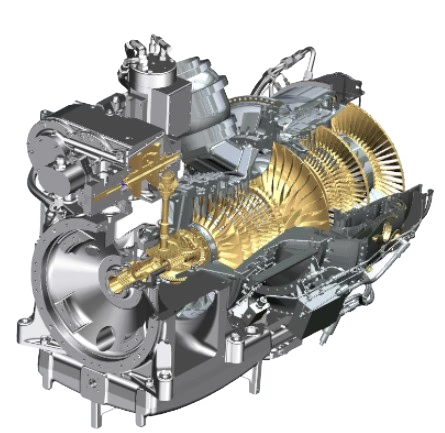
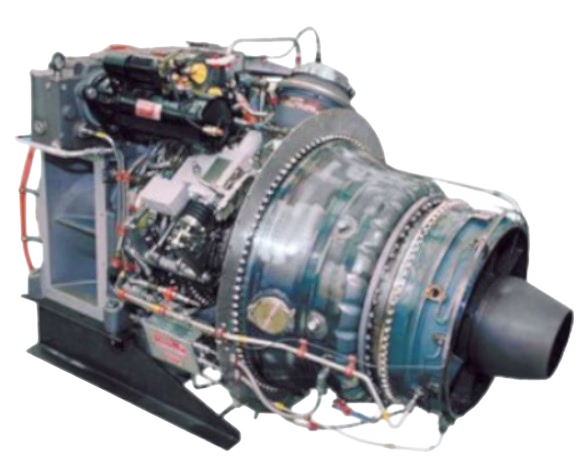
MagCanica aerospace and defense torque sensor systems provide significant benefits as compared with conventional strain gauge based or phase shift/dual encoder torquemeter systems that have traditionally been used in the industry. MagCanica’s truly non-contact technology based on stress measurement enables a much shorter axial length and significant mass and footprint reduction, providing turboshaft engine and rotorcraft driveline designers with previously unavailable options for the mechanical layout. Additionally, MagCanica’s system provides significantly higher frequency response with significant benefits for the purposes of Health and Usage Monitoring (HUMS), Prognostics and Health Management (PHM), and Condition Based Maintenance (CBM), and Engine Health Management (EHM).
Key points regarding MagCanica’s A&D torque sensor systems include:
- Mil-Spec certified and in full production with US Navy hovercraft turboshaft engine torquemeter
- Flight tested multiple times on helicopter tail rotors, and in path towards production with major helicopter supplier
- Flight tested on a developmental helicopter program including closed-loop torque control for real-time maneuvers
- MagCanica’s torque sensor system can be applied to aircraft braking systems to achieve a significant mass reduction for fixed-wing aircraft landing gear.
Energy & Industrial
MagCanica energy sector and industrial torque sensor systems provide significant benefits as compared with conventional strain gauge based or phase shift/dual encoder torquemeter systems that have been traditionally used in these industries. MagCanica’s truly non-contact technology based on stress measurement enables a much shorter axial length and significant mass and footprint reduction, providing gas compression train, mobile fracking system, and power generation train designers with previously unavailable options for the mechanical layout. Additionally, MagCanica’s system provides significantly higher frequency response with significant benefits for the purposes of transient torque monitoring and overload protection, as well as with accurately measuring power degradation over the relatively long life span of the turbines or motors that typically drive such trains.
Key points regarding MagCanica’s energy sector and industrial torque sensor systems include:
- Proven ability to measure on multiple VFD electric motor drivers in the 1-5 MW range
- Proven ability to measure on gas turbine drivers in the 5-40MW range
- Proven ability to measure on steam turbine drivers in the 5MW range
- Capability to measure and calibrate up to 125,000Nm
- In production on commercial land-based gas turbine engines for the oil-and-gas sector
Motorsport
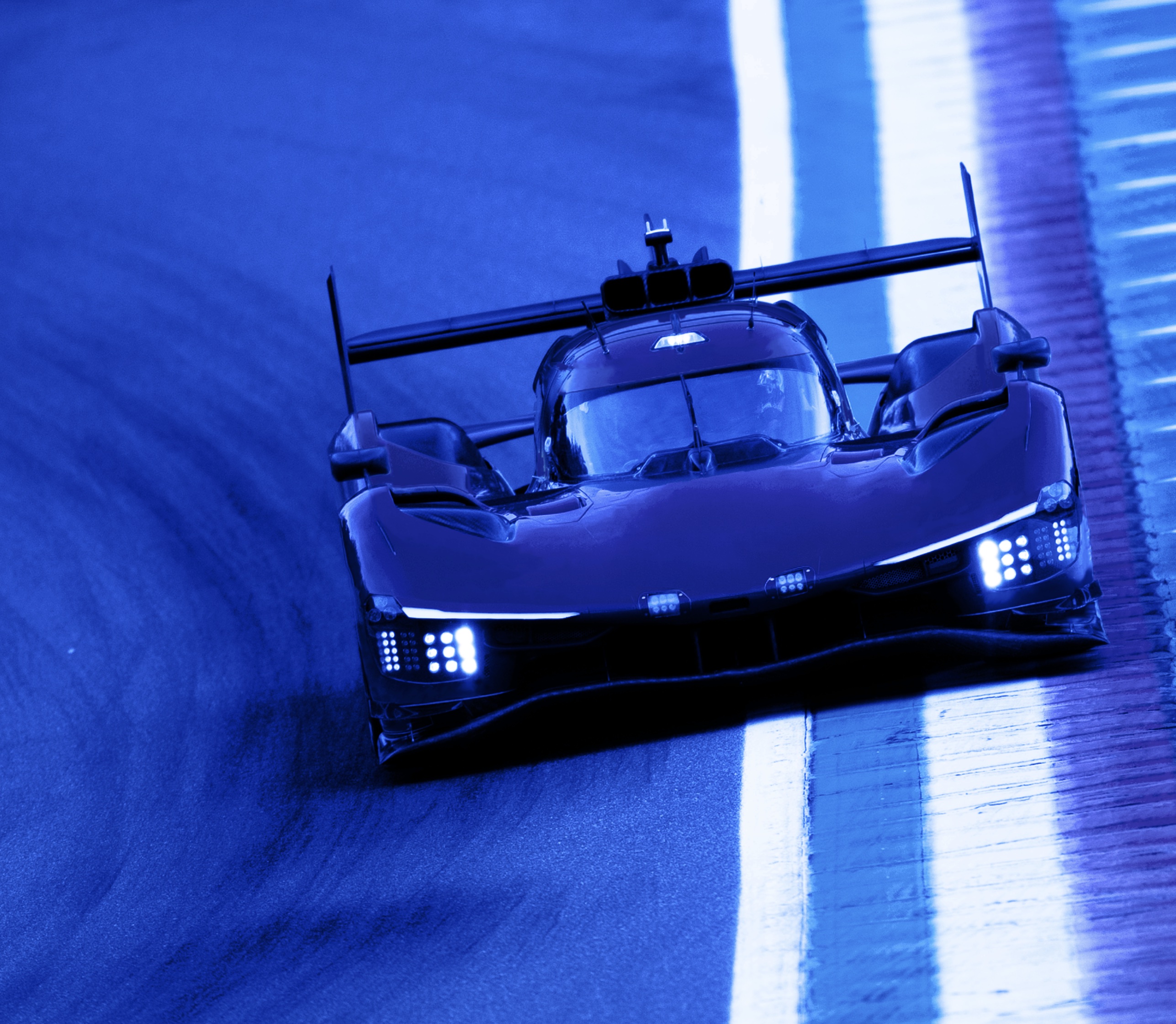
MagCanica automotive and motorsport torque sensor systems provide significant benefits as compared with conventional strain gauge based or phase shift/dual encoder torquemeter systems that were previously used in the industry for testing purposes only. MagCanica’s truly non-contact technology based on stress measurement enables a much shorter axial length and significant mass and footprint reduction, providing racecar transmission and driveline designers with previously unavailable options for the mechanical layout. Additionally, MagCanica’s system provides significantly higher frequency response with significant benefits for the purposes of transient torque monitoring and overload protection, as well as with optimizing launch control and understanding the nuances of driveline dynamics.
Key points regarding MagCanica’s automotive and motorsport torque sensor systems include:
- 100% of Formula 1 and World Endurance Championship LMP1/Hypercars grids since 2014
- Proven ability to achieve 0.25%-of-reading accuracy in-vehicle
- Mandatory systems throughout a vast array of racing categories including F1, FE, W2RC, WEC Hypercar, WEC LMGT, IMSA GTP, IMSA GTD, ELMS GT3, Supercars, and others
- Systems usable for Balance-of-Performance (BoP) including Virtual Energy Tank rules enforcement
- Measurements available at multiple locations throughout the automotive driveline including MGUK shaft, clutch shaft (transmission input shaft), mainshaft (secondary shaft), and driveshafts (half-shafts)
- Systems used for development of road car prototypes by multiple automotive OEM’s, including for gearshift control strategy optimization, hybrid drive simulation modeling correlation, and vehicle performance assessments